
Holding On and Learning to Let Go
All humans are born with several primitive reflexes. As time goes on and your baby becomes more alert, they start to gain control over their movements. In time, the primitive reflexes stop dictating your baby’s movements. By using reflexes repeatedly, babies begin to communicate through the nervous system to the brain. These neural pathways are eventually used to perform that “reflex” movement.
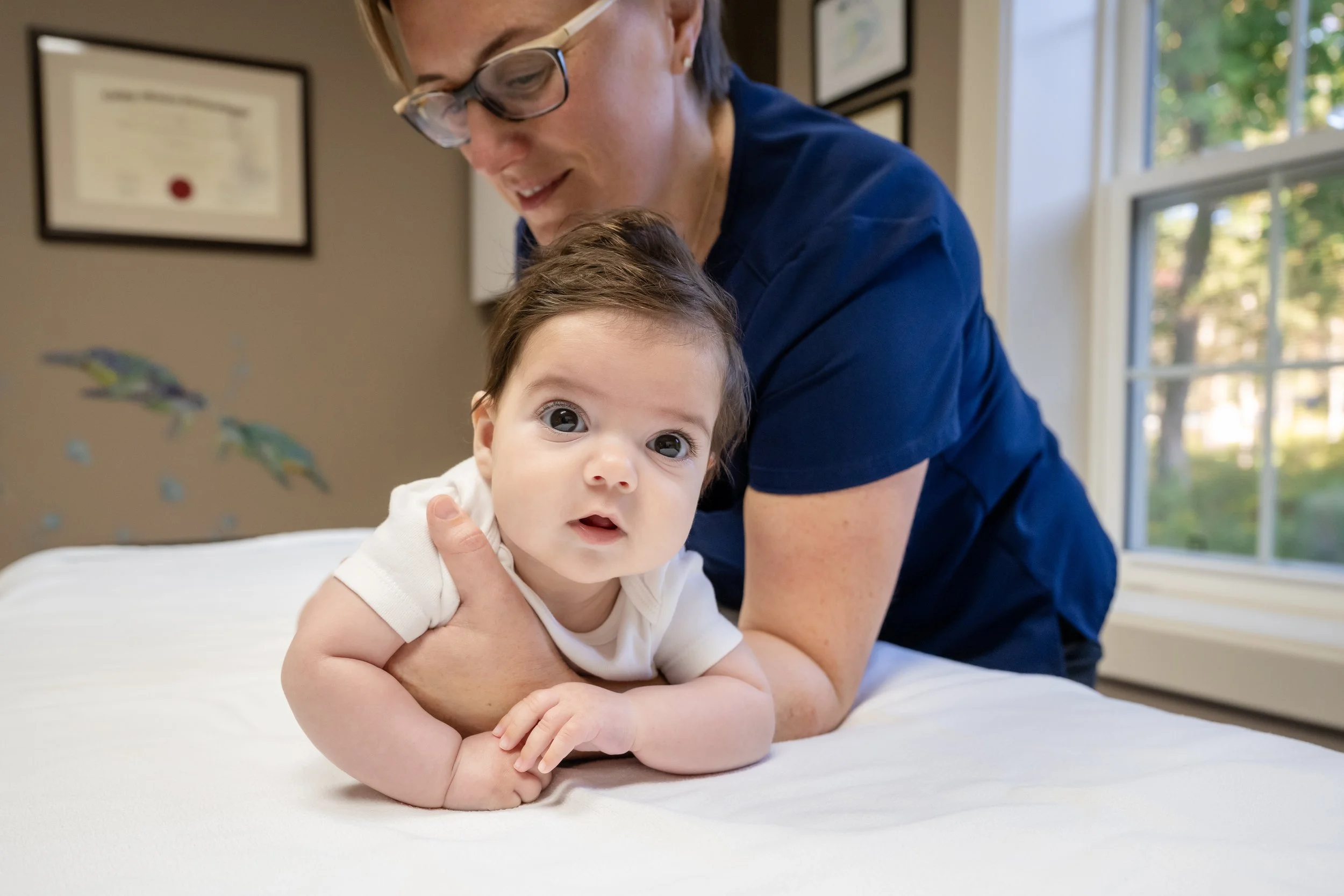
Watching your newborn sleep is mesmerizing. As they grow and their little eyes open for longer periods of time, you will experience a moment where they see you. That moment is life-changing.
We handle our newborns carefully and lovingly, so as not to disrupt their startle reflex. We watch in awe as they strongly grip our fingers. We stroke their cheeks to stimulate them to turn their head towards us. We run out fingers along the bottom of their little feet and watch their toes curl up. Making the conscious choice to slow down through any stage of parenthood and to be present with our child (newborn, toddler, and yes, even those junior high years) is one of the biggest gifts that we can give ourselves – and our children.
All humans are born with several primitive reflexes. As time goes on and your baby becomes more alert, they start to gain control over their movements. In time, the primitive reflexes stop dictating your baby’s movements. By using reflexes repeatedly, babies begin to communicate through the nervous system to the brain. These neural pathways are eventually used to perform that “reflex” movement.
For example, the palmar reflex is when your baby grabs your finger. This reflex sends information to your baby’s brain to close their fingers around an object. Grasping your finger involuntarily as a newborn will help them start to grasp objects sometime between three to four months old, at which point the reflex first starts to weaken. The palmar reflex is usually integrated by the time they are six months old. You’ll notice that when your baby first starts holding toys, they can grab but can’t let go – that’s the palmar reflex at work! By the time they are six months, they are much better at picking up and letting go. So fascinating to watch this happen!
Ok, so how does any of this really affect my baby? Great question! Let’s dive in:
Sometimes primitive reflexes take longer to integrate (read: disappear) than we would like. A baby’s movement patterns give us little hints when this is happening. For example, your five month old baby’s Palmer Reflex may be hanging on a little tight (pun intended) if they are unable to release a toy that they are holding, if they keep their hands clenched in fists in tummy time, if they have difficulty bringing their hands together at their chest, and/or is reaching for a toy (or your hair, glasses, etc.) with hands balled up. You can help them at home by incorporating a few easy changes.
When your baby is enjoying floor play on their back, offer easy to grasp toys such as crinkle cloths, rattles, Oball toys (these balls are great for oral exploration… but that’s a post for another day!) at midline, meaning centre of their chest. Once they are holding the toy, stroke the back of their hand to encourage the hand to open.
In tummy time, if they have their hands balled up, use the same trick: stroke the back of their hands so that they uncurl their fingers.
These simple exercises promote natural hand development through play, and are super safe!
As babies grow and gain more control of their movements, their natural curiosity and desire to explore takes over. How exciting it is to watch your little person unfold through this freedom!
Our children grasp tightly as newborns before letting go.
With this little release, we witness the beginning of their journey.
Manual Osteopathy for Babies
A couple of months ago, Dr. Ash forwarded me an email from the College of Family Physicians of Canada titled “Trying Tongue-Tie Treatment – Does Frenotomy Fix Feeding Frustrations?” The conclusion was… maybe, sometimes, but often, not really.
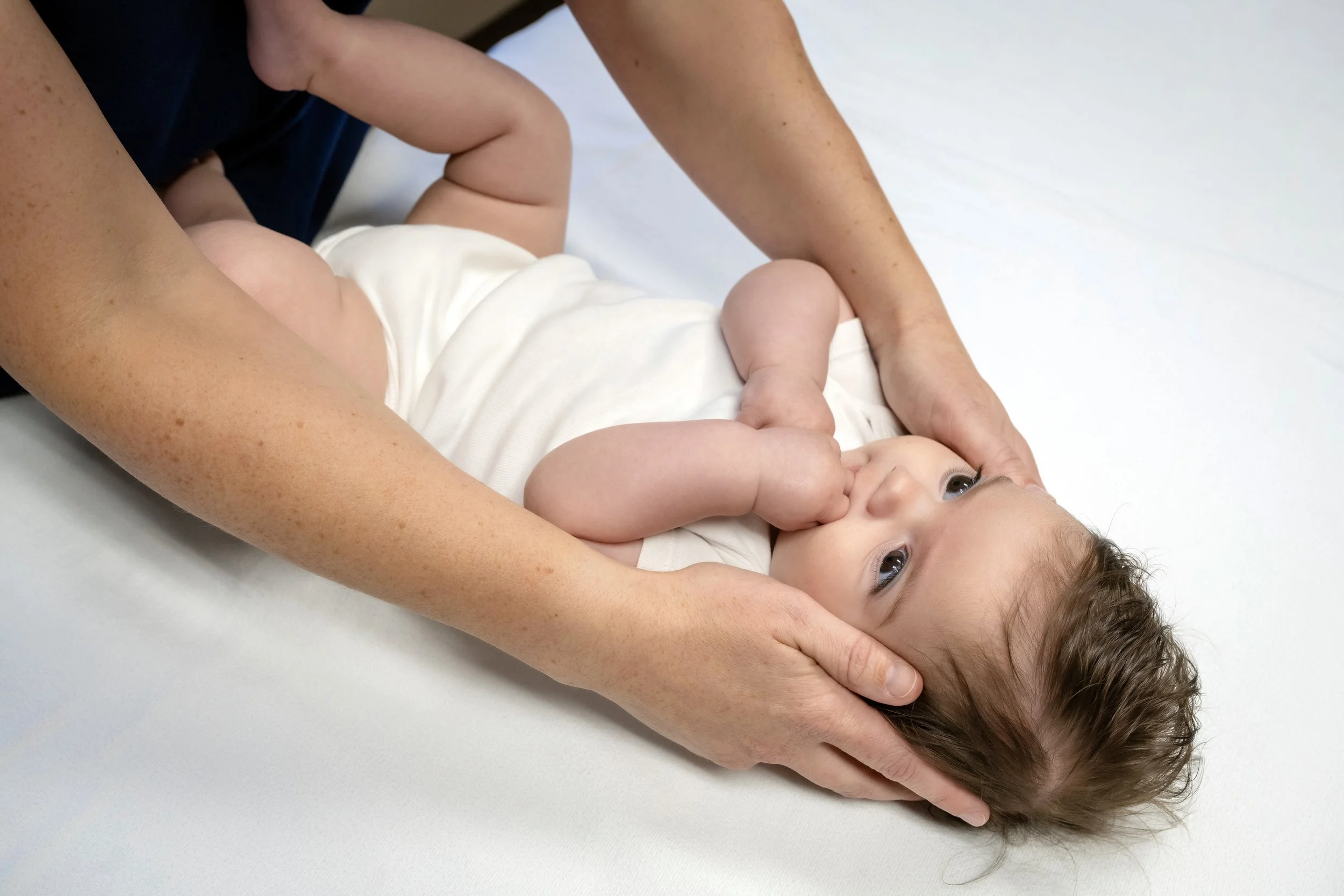
A couple of months ago, Dr. Ash forwarded me an email from the College of Family Physicians of Canada titled “Trying Tongue-Tie Treatment – Does Frenotomy Fix Feeding Frustrations?”
The conclusion was… maybe, sometimes, but often, not really. In the study they referenced, maternal nipple pain was reduced by about 2 points on a 10-point pain scale (uhh, ouch) and effects on baby’s weight gain and continued breastfeed were unclear because of the large amount of crossover in the control groups.
What is a tongue tie, you may be asking.
Well, let’s dive in: an ankyloglossia, or a “tongue tie” occurs when the lingual frenulum (that piece of skin that attaches the bottom of your tongue to the bottom of your mouth) is shorter and thicker than it needs to be. This prevents the tongue from moving freely (a freely moving tongue is essential for baby to feed easily).
But wait! There’s more! Because there are actually seven frenula in the mouth, there is more than one place for an oral tie. The less commonly recognized oral ties are lip and cheek (or buccal) ties. A maxillary lip tie occurs when the skin of the upper lip is attached to the lower part of the gums, between the two front teeth (or where your baby’s front teeth will one day be). A cheek tie occurs when the frenulum (piece of skin) inside the upper cheek is too tight and/or short.
“Well, why does any of this even matter?” You may be wondering.
Oral ties affect the ability of a baby to latch onto a nipple (whether that nipple is silicone or their mother’s nipple is irrelevant). For a baby to have a good latch, there needs to be an airtight seal around the nipple. Oral ties increase the amount of tension in a baby’s mouth, and one of the first signs of a tie is difficulty latching. This is can show up as a shallow latch, an inability to stay latched, getting tired before they are full, frustration when the nipple is close to their mouth, a clicking or smacking noise while they eat, or milk running out of the corners of their mouth while eating (this last one is usually seen more in bottle-fed babies).
Oral ties are usually diagnosed by a health care professional or by a lactation consultant. Some recommend surgical correction of the tie, some recommend against surgical correction of the tie. If you dive into the rabbit hole, you will find equal amounts of conflicting evidence both for and against a surgical release or oral ties. So, what’s a parent to do?
In my clinical experience, oral ties do not exist in isolation. They are the end of a chain of tension that usually resides in the diaphragm, thoraco-lumbar junction (TLJ), shoulders, neck, throat, the base of the cranium and of course, the mouth. Releasing the oral tie does loosen the end of that chain, but it does not address the tensional pattern. Tensional patterns in babies can show up as, a head-rotational preference, moving one arm a lot more than the other, a newborn curling onto their side when sleeping or a baby whose neck is often in extension (looking up).
In addition to affecting feeding, oral ties often disrupt a baby’s digestive system and their ability to regulate. For an infant, “being regulated” shows up as predictable sleep-wake cycles, appropriate muscle tone (not too stiff, not too floppy), calm breathing and heart rate. Manual osteopathy can help to reduce to discomfort in the baby’s digestive system, it can help balance the baby’s nervous system and it can balance the baby’s movement patterns.
In my opinion, this is what the research on oral ties is missing – the addition of osteopathy to your baby’s care. As the tensional patterns are released, a surgical correction has the potential to be more efficient, providing relief for both baby and parents.
Combining care from your primary care provider, osteopath and lactation consultant is the best way to arm yourself with the tools to navigate your baby’s care.
A Change of Scenery for a Change of Perspective
Earlier this month, I boarded a plane flying to Berlin to attend the German School of Osteopathy’s annual conference. The theme was “Osteopathy in Paediatrics”. In the past year, more and more of my client base has been children and babies (which I Love!), so what better way to deepen my knowledge…
Earlier this month, I boarded a plane flying to Berlin to attend the German School of Osteopathy’s annual conference. The theme was “Osteopathy in Paediatrics”. In the past year, more and more of my client base has been children and babies (which I
Love!), so what better way to deepen my knowledge than to learn from osteopaths with multiple decades of experience, in a group of professionals with a passion similar to my own.
Many incredibly experienced osteopaths from all over the world gathered to learn in a series of lectures and small group workshops. I was so excited (and, I admit, nervous!) as I entered the auditorium at the Urania Berlin Conference Centre, and sat down to enjoy lectures on subjects including “Pre and Postnatal Influences on the Child”, “A Case Presentation of the Osteopathic Journey of a Child with Congenital Heart Disease”, “Therapeutic Treatment Approaches for Traumatized Children”, “Consent of Children and Osteopathy”, and “The Osteopath’s Role in Cranial Facial Asymmetries, Plagiocephaly and Torticollis”. My brain was abuzz as I took in so much new information, and new perspectives and approaches to treating infants and children as an osteopath.
The next two days consisted of four workshops, from Canadian, British and French osteopaths. The workshops focused completely on treating babies who are experiencing digestive troubles, difficulty feeding, and delayed physical milestones (such as sitting, four-point crawling, and tip-toe walking).
Over the three days of the conference, I learned so much about how babies’ nervous systems develop and how my hands-on work can help soothe and overwhelmed and unsettled baby.
Many people are surprised to learn that osteopathy is safe, gentle and effective options for children of all ages. Many babies and children come into my office for a multitude of different reasons. The treatments focus on the child’s mobility (for example: is there neck, shoulder or hip tension?) as well as the quality of movement (yes, there is neck, arms and leg movements, but not a full range of motion as we hope to see). The treatments also focus on the child’s overall wellbeing (how are they eating? How are they sleeping? How are they pooping?) I learned new ways to observe a child’s movement patterns and body tension, as well as new techniques to use during treatment. This will help to create a more effective treatment.
One of the biggest takeaways from the conference was the importance of collaborative care. This reinforces my commitment to working with lactation consultants, midwives, primary care practitioners, chiropractors and physiotherapists. I am focusing even more on building these connections so that parents can feel supported in their journey by an entire team.