A Change of Scenery for a Change of Perspective
Earlier this month, I boarded a plane flying to Berlin to attend the German School of Osteopathy’s annual conference. The theme was “Osteopathy in Paediatrics”. In the past year, more and more of my client base has been children and babies (which I
Love!), so what better way to deepen my knowledge than to learn from osteopaths with multiple decades of experience, in a group of professionals with a passion similar to my own.
Many incredibly experienced osteopaths from all over the world gathered to learn in a series of lectures and small group workshops. I was so excited (and, I admit, nervous!) as I entered the auditorium at the Urania Berlin Conference Centre, and sat down to enjoy lectures on subjects including “Pre and Postnatal Influences on the Child”, “A Case Presentation of the Osteopathic Journey of a Child with Congenital Heart Disease”, “Therapeutic Treatment Approaches for Traumatized Children”, “Consent of Children and Osteopathy”, and “The Osteopath’s Role in Cranial Facial Asymmetries, Plagiocephaly and Torticollis”. My brain was abuzz as I took in so much new information, and new perspectives and approaches to treating infants and children as an osteopath.
The next two days consisted of four workshops, from Canadian, British and French osteopaths. The workshops focused completely on treating babies who are experiencing digestive troubles, difficulty feeding, and delayed physical milestones (such as sitting, four-point crawling, and tip-toe walking).
Over the three days of the conference, I learned so much about how babies’ nervous systems develop and how my hands-on work can help soothe and overwhelmed and unsettled baby.
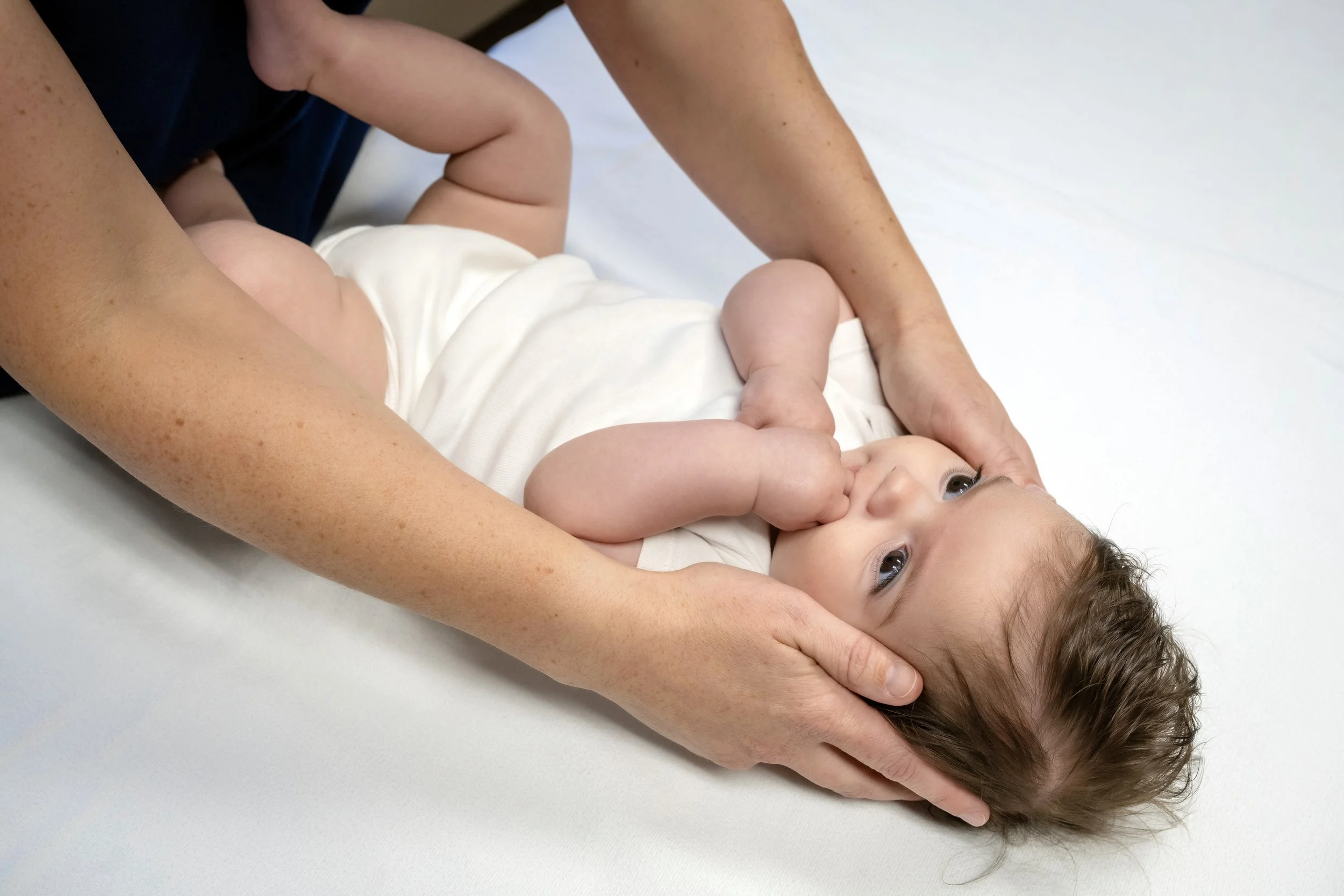
Many people are surprised to learn that osteopathy is safe, gentle and effective options for children of all ages. Many babies and children come into my office for a multitude of different reasons. The treatments focus on the child’s mobility (for example: is there neck, shoulder or hip tension?) as well as the quality of movement (yes, there is neck, arms and leg movements, but not a full range of motion as we hope to see). The treatments also focus on the child’s overall wellbeing (how are they eating? How are they sleeping? How are they pooping?) I learned new ways to observe a child’s movement patterns and body tension, as well as new techniques to use during treatment. This will help to create a more effective treatment.
One of the biggest takeaways from the conference was the importance of collaborative care. This reinforces my commitment to working with lactation consultants, midwives, primary care practitioners, chiropractors and physiotherapists. I am focusing even more on building these connections so that parents can feel supported in their journey by an entire team.