
Head shape
Babies grow and change quickly during their first year. When they are born, their skull is still developing and it is common for parents to notice changes in head shape or that their baby prefers to have their head turned a certain way.
You might notice that your baby almost always looks in one direction, turns more easily to one side, prefers a particular position when feeding or being carried, or has developed an area of flattening on their head.
Head shape and movement are closely connected, so when a head-turning preference is present, it's helpful to look at how the rest of the body is moving as well as the shape of the head.
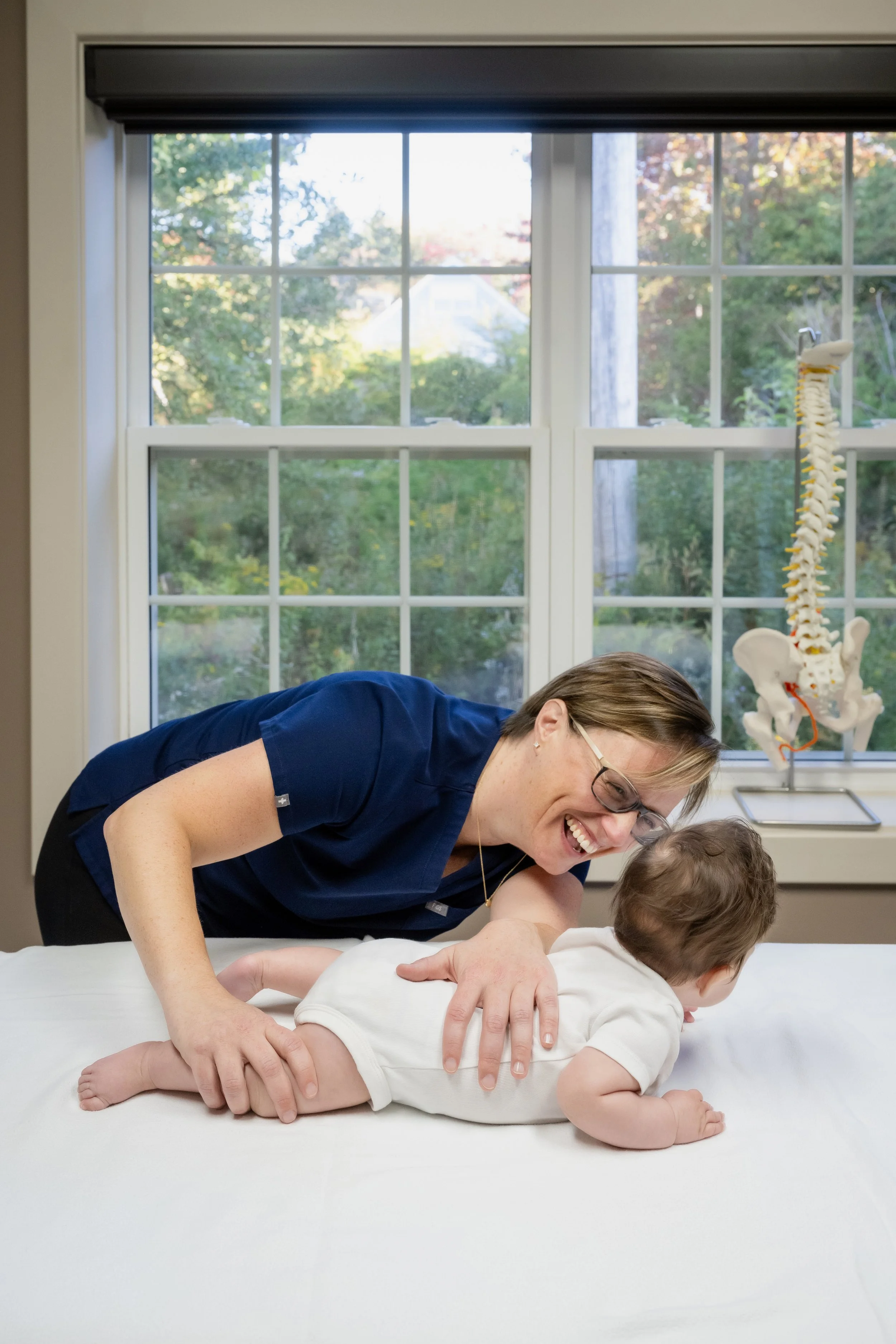
Looking to one side
Babies often develop favourite positions, but a strong preference for one side can sometimes mean that turning the other way is more difficult or less comfortable.
This can show up during feeding, carrying, play or sleep. You may notice your baby repeatedly returning their head to the same side, looking more easily in one direction, or becoming frustrated when encouraged to turn the other way.
Over time, always resting or turning toward the same side can contribute to flattening on one area of a baby’s head.
Looking in both directions
When a baby strongly prefers turning their head to one side, we look at how comfortably they can move in both directions and whether tension through the neck and shoulders may be influencing that preference.
We also consider how your baby positions their head during feeding, carrying, tummy time and play. The goal is to understand their usual movement patterns and whether there are positions or directions that seem more difficult or uncomfortable.
Giving babies opportunities to look, reach and move in different directions throughout the day can encourage variety as they grow and develop.